
Preparing for the TEAS 7 or HESI A2 exam can feel challenging, especially when balancing school, work, family responsibilities, and nursing program application deadlines. One of the biggest mistakes students make is studying without a structured plan.
A successful nursing entrance exam preparation strategy is not about studying for long hours every day — it’s about consistency, organization, and focusing on the right topics at the right time.
In this guide, we’ll break down an effective study plan that can help future nursing students prepare smarter for both TEAS 7 and HESI A2 exams.
Why a Study Plan Matters
A study plan helps students:
- stay organized
- avoid last-minute cramming
- improve time management
- track progress
- reduce stress and anxiety
- focus on weak areas consistently
Without a plan, many students waste valuable study time jumping randomly between subjects without building long-term understanding.
A realistic, structured approach leads to better retention and greater exam confidence.
Step 1 — Understand the Exam Structure
Before building a study schedule, students should understand the subjects covered on the exam.
TEAS 7 Subjects
The TEAS 7 exam includes:
- Reading
- Mathematics
- Science
- English & Language Usage
HESI A2 Subjects
The HESI A2 exam commonly includes:
- Reading Comprehension
- Vocabulary & General Knowledge
- Grammar
- Anatomy & Physiology
- Mathematics
Knowing what is tested helps students prioritize study sessions more effectively.
Step 2 — Set a Realistic Study Timeline
Most students benefit from preparing for:
6–8 weeks
depending on:
- current knowledge level
- schedule availability
- academic background
- comfort with science and math
Students who struggle with anatomy or mathematics may need additional preparation time.
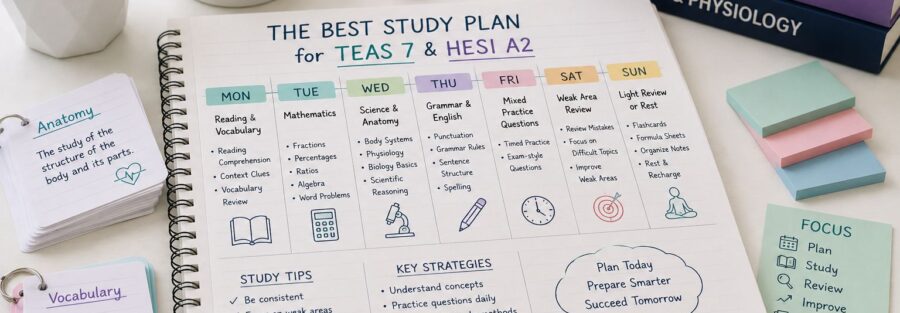
Recommended Weekly Study Schedule
A balanced study schedule prevents burnout while maintaining consistency.
Monday — Reading & Vocabulary
Focus on:
- reading comprehension
- context clues
- vocabulary review
- passage analysis
Recommended study time:
1–2 hoursTuesday — Mathematics
Focus on:
- fractions
- percentages
- ratios
- algebra basics
- conversions
- word problems
Practice solving problems daily to improve speed and confidence.
Wednesday — Science & Anatomy
Focus heavily on:
- body systems
- physiology
- biology basics
- scientific reasoning
- medical terminology
Science preparation often requires repeated review sessions.
Thursday — Grammar & English
Review:
- punctuation
- sentence structure
- spelling
- grammar correction
- language usage
These areas are commonly tested on both TEAS 7 and HESI A2 exams.
Friday — Mixed Practice Questions
Practice:
- timed questions
- subject mixing
- exam-style formats
This improves:
- stamina
- focus
- time management
- question interpretation
Saturday — Weak Area Review
Spend extra time reviewing:
- difficult concepts
- incorrect answers
- confusing topics
- missed questions
Targeted review improves long-term understanding significantly.
Sunday — Light Review or Rest
Avoid burnout.
Students can:
- review flashcards
- organize notes
- revise formulas
- rest and recharge
Recovery is an important part of effective studying.
Step 3 — Focus on Weak Subjects Early
One of the most effective strategies is identifying weak subjects at the beginning of preparation.
Examples:
- struggling with anatomy?
- confused by ratios?
- difficulty understanding reading passages?
- weak vocabulary retention?
Address difficult subjects early instead of postponing them.
Improving weak areas gradually over time is far more effective than cramming later.
Step 4 — Use Multiple Study Methods
Different study methods improve retention and understanding.
Helpful methods include:
- flashcards
- handwritten notes
- diagrams
- formula sheets
- practice tests
- study guides
- active recall
- spaced repetition
Combining methods keeps studying engaging and improves memory retention.
Step 5 — Practice Under Timed Conditions
Many students know the material but struggle with:
- timing
- stress
- pacing
Timed practice sessions help students:
- build exam stamina
- improve focus
- reduce anxiety
- learn pacing strategies
Simulating real exam conditions improves readiness significantly.
Step 6 — Review Mistakes Carefully
Practice questions are only effective when students review mistakes properly.
After each session:
- review incorrect answers
- understand why mistakes happened
- revisit weak concepts
- identify patterns
This process strengthens critical thinking and improves performance over time.
Step 7 — Avoid Last-Minute Cramming
Cramming before exam day often increases stress and reduces concentration.
Instead:
- review summary notes
- sleep early
- stay hydrated
- organize exam materials
- relax mentally before test day
A calm and rested mind performs better during exams.
Best Resources for TEAS 7 & HESI A2 Preparation
Students preparing for nursing entrance exams often benefit from:
- downloadable study guides
- anatomy review notes
- vocabulary sheets
- math formula handbooks
- practice questions
- nursing-focused preparation materials
Organized resources simplify studying and improve preparation efficiency.
Tips for Staying Motivated
Long study schedules can become exhausting.
Helpful motivation strategies include:
- setting small goals
- tracking progress weekly
- rewarding consistency
- studying with accountability partners
- maintaining realistic expectations
Remember:
consistent progress matters more than perfection.
